Sea freight
FCL — Full Container Load
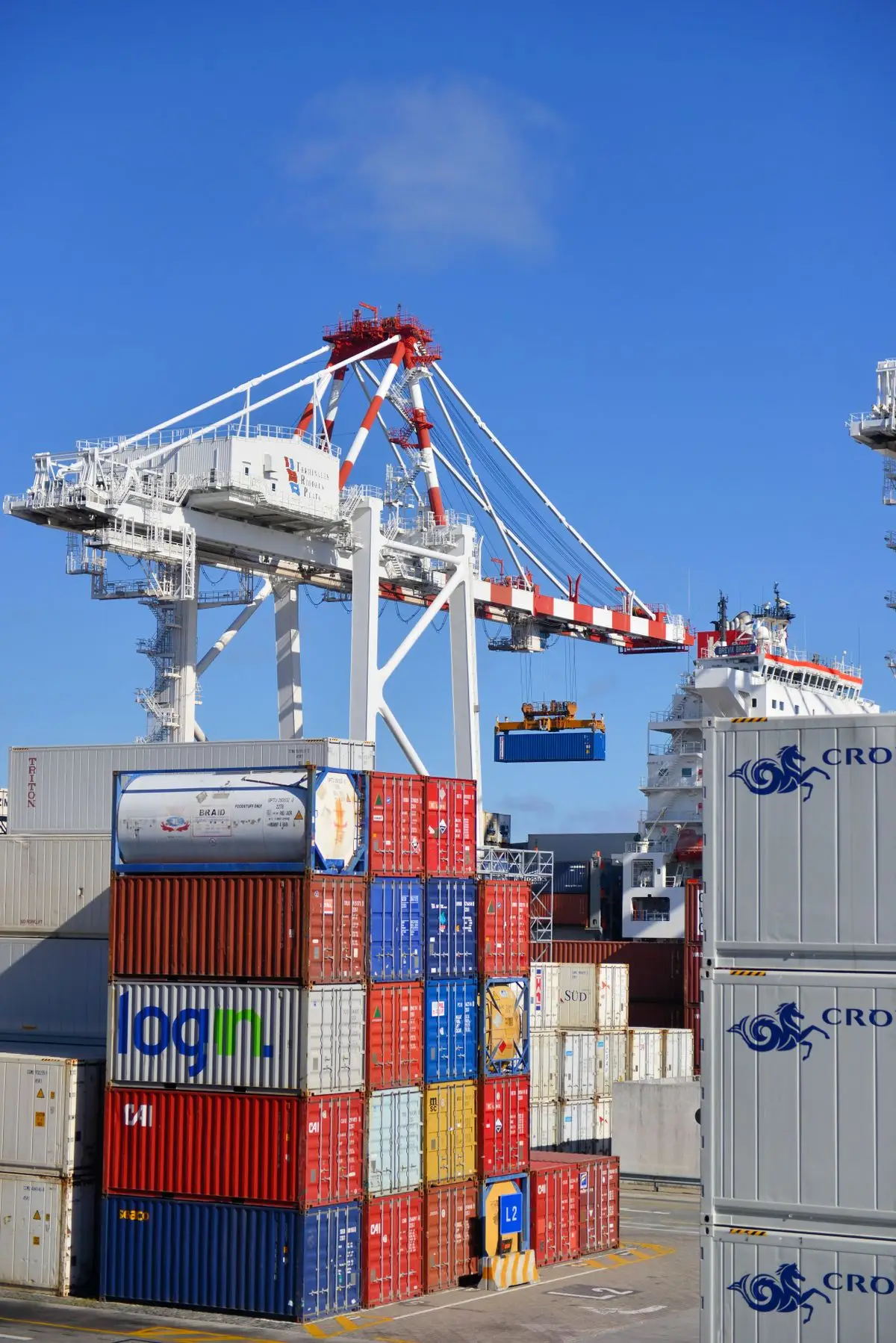
Full Container Load (FCL) freight gives you exclusive use of a shipping container on any international lane — import, export or cross-trade — priced per container with transparent surcharges. The most cost-effective option once cargo fills 15+ cubic metres.
What is FCL shipping?
FCL (Full Container Load) gives you exclusive use of an entire shipping container from origin to destination, priced as a flat rate per container rather than per cubic metre. It is normally the cheaper choice once cargo fills roughly 15 cubic metres, and the box stays sealed from loading until it reaches the consignee.
Container equipment
We book container types to match your cargo — dry, high cube, temperature-controlled or specialised.
20ft General Purpose (GP)
~33 cubic metres capacity — the standard dry container for general cargo.
40ft General Purpose (GP)
~67 cubic metres capacity — the most common container for full loads.
40ft High Cube (HC)
~76 cubic metres capacity, 30cm taller — for bulkier, lighter cargo.
20ft / 40ft Reefer (RF)
Temperature-controlled for perishables and pharmaceuticals.
Open Top
Removable roof for over-height or crane-loaded cargo.
Flat Rack
No sides or roof — for oversized machinery and vehicles.
Best for
FCL suits large-volume shipments, cargo that needs to stay sealed from origin to destination, or any load where LCL consolidation risk (damage, delay at a shared CFS) isn't worth the saving. We offer both port-to-port and full door-to-door service, on import and export lanes alike.
Incoterms we handle
An Incoterm is the three-letter rule in your sales contract that fixes who arranges the freight, who pays which costs, and — the part that decides arguments later — exactly where the goods stop being the seller's risk and become yours. We quote and book against whichever one your contract specifies, and can advise which shifts the most risk and cost off your side.
The seller simply makes the goods available at their own premises. You arrange and pay for everything from that point — loading, export clearance, freight, import and delivery.
Risk passes: At the seller's premises, before anything is loaded
It makes you responsible for the export declaration in the seller's country, which a non-resident business usually cannot legally file. FCA solves this.
The seller delivers the goods to a carrier you nominate and clears them for export. You arrange the main carriage from there.
Risk passes: When the goods are handed to your nominated carrier
The correct rule for containers, and the one we would usually steer you to instead of FOB — the handover point matches what physically happens at a container terminal.
The seller delivers the goods on board the vessel at the named port and clears them for export. You arrange and pay the sea freight onward.
Risk passes: Once the goods are loaded on board the vessel
Written for cargo loaded over a ship's rail, not containers — with a container the seller loses control at the terminal days before loading, leaving a gap where responsibility is unclear.
The seller pays the sea freight to the destination port and buys insurance for the voyage.
Risk passes: At origin, when the goods are loaded — not on arrival
The trap: the seller pays for the voyage but you carry the risk of it, and the insurance the rule requires is only minimum cover. If the cargo matters, arrange your own.
The seller delivers to the address you name, ready for unloading. You handle import clearance and pay the duty and import VAT.
Risk passes: On arrival at the named place, before unloading
Usually the better answer than DDP: you keep control of the customs entry and can reclaim import VAT, without the seller needing a tax registration in your country.
The seller delivers to your door with everything paid, including import duty and taxes. Maximum seller responsibility.
Risk passes: On arrival at your named destination
It obliges the seller to be importer of record in your country, which usually needs a local tax registration they do not have. Sellers agree to it to win the sale, then find they cannot perform it.
Not sure which your contract uses, or which you should be asking for? Read the full guide or tell us the term when you request a quote and we will explain what it commits you to.
How FCL is priced
A flat rate per container for your route, plus terminal handling charges (THC), a documentation fee, and a bunker/currency adjustment factor (BAF/CAF). Reefer containers carry a fuel-related multiplier. Tell us both ends of the lane on the FCL quote form and we will price it.
Also available
Complete the move with our other services
Cargo Insurance
All-risk marine and air cargo cover for the declared value of your goods, arranged at quote stage on any lane.
View serviceWarehousing
Bonded and general storage at origin and destination, with pick, pack and onward distribution.
View serviceRoRo
Roll-on/roll-off shipping for cars, vans, trucks, plant and any self-propelled or wheeled equipment.
View serviceDoor to Door
Collection at the shipper's premises and delivery to the consignee's door, with everything between handled by us.
View serviceProject Cargo
Out-of-gauge, heavy-lift and breakbulk consignments that will not travel in a standard container.
View serviceAsk about any of these when you request a quote or get in touch.
FCL: common questions
When is FCL cheaper than LCL?
FCL is normally cheaper once your cargo fills roughly 15 cubic metres or more. Below that, LCL's per-cubic-metre pricing wins; above it, you are paying groupage rates for space a whole container would have given you for less. The crossover is not fixed — it moves up when ocean rates spike and down when space is plentiful, so it is worth recalculating each quarter against your actual quoted rates.
How much fits in a 20ft and a 40ft container?
A 20ft general purpose container holds roughly 33 cubic metres, a 40ft holds roughly 67 cubic metres, and a 40ft high cube holds roughly 76 cubic metres. In practice you will not use all of it: pallet footprints, stacking limits and weight caps usually mean a 20ft box takes about 10 standard pallets and a 40ft about 21.
What is included in an FCL quote?
A flat rate per container for your route, plus terminal handling charges (THC) at both ends, a documentation fee, and a bunker or currency adjustment factor (BAF/CAF). Reefer containers carry a fuel-related multiplier. Customs clearance, inland collection and delivery, and cargo insurance are quoted alongside so you see the landed cost rather than the ocean leg alone.
What are demurrage and detention on an FCL shipment?
Demurrage is charged when your container sits inside the terminal beyond the free days; detention is charged when you have taken it out of the terminal and not returned the empty in time. Both run per container per day and both are avoidable with planning — the usual cause is customs paperwork that was not ready when the vessel arrived.
Can you ship oversized or temperature-controlled cargo FCL?
Yes. Open top containers take over-height or crane-loaded cargo, flat racks take oversized machinery and vehicles with no sides or roof, and 20ft or 40ft reefers carry temperature-controlled goods such as perishables and pharmaceuticals. Anything beyond container dimensions moves as project or breakbulk cargo instead.
Ready to move cargo by FCL?
Any country to any country, import or export — send us the origin, destination and cargo details and we'll come back with a competitive rate within one business day.